
BSc in Computer Science
Pending accreditation by the MFHEA
Program Overview
The aim of BSc in Computer Science Degree Programme is to prepare learners to be able to design computer programs, develop software, use information technologies in data processing and solve problems in the industry. BSc Computer Science pioneers novel ways to harness computing power intelligently. Breakthroughs in areas like: networking, database systems, and human-computer interaction (HCI) laid the foundation for transformative innovations such as the world wide web.
The programme starts with core fundamentals and then builds on that knowledge the skills and competences required for advanced equips professionals with the skills to architect and deploy sophisticated software systems that address complex programming challenges. The aim of the programme is to prepare learners to address the engineering of large software/hardware systems and to apply computing concepts to complex systems.
Program Generic Information
ENTRY REQUIREMENTS
Applicants for the AUM undergraduate programs need to submit the following:
- Official AUM application: to be submitted online (website page).
- Scanned copies of Secondary School qualifications certificates and transcripts in the original language, as well as certified English translations, if necessary. If admitted to AUM, all original documents must be presented to the Admissions Office in order to be permitted to officially enroll. Details of acceptable Secondary School qualifications are provided below.
- Proof of English Proficiency
- The English language proficiency requirement may be waived if you are a native speaker of English and you have completed your secondary education in a country where English is the official language and English was the language of instruction where you graduated.
- AUM reserves the right to request English test results from any applicant.
English Language Examining Boards recognised by AUM and minimum scores required:
| Undergraduate | IELTS | TOEFL | ESB Certificate |
| 6.0 | 65 | B2 |
Note: all score reports will only be valid if issued within 2 years from the date of matriculation at AUM.
For candidates following the Maltese education system:
- A Matriculation (MATSEC) certificate, with two subjects at an Advanced level, three other subjects at Intermediate level and Systems of Knowledge, and a pass at Grade 5 or better in the Secondary Education Certificate (SEC) examinations in English Language. If you are not in possession of a SEC certificate in English, you might be asked to carry out an Institutional English diagnostic test.
PROGRAM DETAILS
|
TYPE OF QUALIFICATION: Bachelor of Science in Computer Science/BSc in Computer Science |
DEGREE LEVEL: MQF (Malta Qualification Framework) Level 6 EQF (European Qualification Framework) – Bachelor’s Degree |
|
PROGRAM LENGTH: 4 years / Full-Time 6 years/part-time
|
CREDITS NEEDED TO EARN THE DEGREE: 240 ECTS
|
|
GPA NEEDED TO EARN THE DEGREE: 2.0 or higher |
LANGUAGE OF INSTRUCTION: English |
|
MODE OF DELIVERY Face-to-face Blended (50% online and 50% face-to-face) |
|
|
ACCREDITATION STATUS:
Accreditation Pending Kindly be informed that this programme is undergoing accreditation from the Malta Further and Higher Education Authority (MFHEA)
|
ADDRESS OF PROGRAMME DELIVERY: American University of Malta https://aum.edu.mt/ Category: University Licensed, number: 2016-002 Address: Triq Dom Mintoff, Bormla BML1013 Malta |
PROGRAM STRUCTURE
| MODULE CODE | MODULE / UNIT TITLE | COMPULSORY / ELECTIVE | ECTS / ECVETS | MODE OF DELIVERY | MODE OF ASSESSMENT |
| CSC 308 | Computer Networks | Compulsory | 6 | Lectures, Tutorials | Examination Assesment |
| CSC 100 | Introduction to ICT | Compulsory | 6 | Lectures, Tutorials | Examination Assesment |
| MAT 120 | Calculus | Compulsory | 8 | Lectures, Tutorials | Examination Assesment |
| CSC102 | Introduction to Software Engineering | Compulsory | 6 | Lectures, Tutorials | Examination Assesment |
| CSC101 | Intro to Programming | Compulsory | 8 | Lectures, Tutorials | Examination Assesment |
| CSC 114 | Database Management Systems | Compulsory | 8 | Lectures, Tutorials | Examination Assesment |
| CSC 111 | Object Oriented Programming | Compulsory | 8 | Lectures, Tutorials | Examination Assesment |
| CSC 112 | Data Structures and Algorithms I | Compulsory | 8 | Lectures, Tutorials | Examination Assesment |
| CSC 113 | Operating Systems | Compulsory | 6 | Lectures, Tutorials | Examination Assesment |
| Programming for Artificial Intelligence | Compulsory | 8 | Lectures, Tutorials | Examination Assesment | |
| CSC 310 | Internet Applications Engineering | Compulsory | 8 | Lectures, Tutorials | Examination Assesment |
| SEN 301 | Intro to Machine Learning | Compulsory | 6 | Lectures, Tutorials | Examination Assesment |
| CSC 212 | Data Structures and Algorithms II | Compulsory | 8 | Lectures, Tutorials | Examination Assesment |
| CSC 304 | Artificial Intelligence and Expert Systems | Compulsory | 8 | Lectures, Tutorials | Examination Assesment |
| Advance DBMS | Compulsory | 8 | Lectures, Tutorials | Examination Assesment | |
| Compiler Construction | Compulsory | 8 | Lectures, Tutorials | Examination Assesment | |
| SEN 299 | Information Security | Compulsory | 8 | Lectures, Tutorials | Examination Assesment |
| Theory of Automata | Compulsory | 6 | Lectures, Tutorials | Examination Assesment | |
| SEN 334 | Human Computer Interaction | Compulsory | 6 | Lectures, Tutorials | Examination Assesment |
| Big Data Analytics | Compulsory | 8 | Lectures, Tutorials | Examination Assesment | |
| Parallel & Distributed Computing | Compulsory | 8 | Lectures, Tutorials | Examination Assesment | |
| Image Processing and Computer Vision | Compulsory | 6 | Lectures, Tutorials | Examination Assesment | |
| SEN 302 | Data Science with Python | Compulsory | 8 | Lectures, Tutorials | Examination Assesment |
| CSC 491 | Capstone Project I | Compulsory | 6 | Lectures, Independent Research | Presentation Report |
| CSC 492 | Capstone Project II | Compulsory | 6 | Lectures, Independent Research | Presentation Report |
| Discrete Mathematics | Elective | 6 | Lectures, Tutorials | Examination Assesment | |
| Introduction to Data Analysis, Probability and Statistics | Elective | 6 | Lectures, Tutorials | Examination Assesment | |
| Computer Graphics | Elective | 6 | Lectures, Tutorials | Examination Assesment | |
| MIS | Elective | 6 | Lectures, Tutorials | Examination Assesment | |
| TOTAL ECTS / ECVETS for Course Completion | 180 |
LEARNING OUTCOMES
- Identify and solve complex problems by applying principles of computers, science and engineering.
- Formulate the principles of object-oriented programing and applications.
- Understand computer organization, operating systems, networks, and cloud computing principles.
- Identify professional issues to cover social, ethical and legal aspects.
- Design, implement, test, and debug software solutions using modern programming languages and tools (e.g., Python, Java, C++, Git).
- Analyze computational problems and apply appropriate algorithms and data structures to optimize efficiency (e.g., sorting, graph traversal, dynamic programming).
- Understand how computing technologies influence diverse cultures, economies, and environments.
PEDAGOGICAL METHODS FOR THIS PROGRAM
The Bachelor of Science (BSc) in Computer Science focuses on designing optimal solutions for complex computational challenges. It allows the students to develop efficient methods to store and manage information in databases; transmit data securely across networks; render intricate graphics and visualizations.
By grounding solutions in theoretical principles, BSc Computer Science identifies performance limits and refines algorithms to create innovative problem-solving approaches that maximize efficiency and scalability.
GENERAL ASSESSMENT POLICY AND PROCEDURES
EMPLOYABILITY/CAREERS
Graduate students may apply for the following positions in industry such as but not limited to:
Industries
- IoT Engineer
- Software Developer
- Game Developer
- Embedded Systems Engineer
- DevOps Engineer
- Data Scientist/Analyst
- Machine Learning Engineer
- AI Business Analyst
- Business Intelligence Analyst
- Solutions Architect
Academics & research
- Postgraduate studies
- Research analyst
- Lecturer
Employability ( Freelance or other)
- Web Developer
- Mobile App Developer
- IT Consultant
Corporate & Commercial Roles
- Network Administrator/Engineer
- Systems Administrator
- Cloud Engineer
- Database & Cloud Manager
- Database Administrator (DBA)
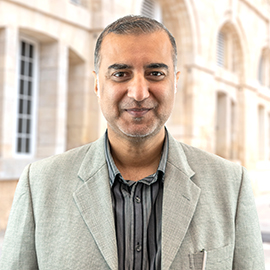
Dr. Nabeel Talib
Associate Professor
Contact the Director for this Program
Dr. Nabeel Talib
Email: [email protected]
Phone: +356 2169 6970