

BSc in Business and Finance

This Program is accredited by the MFHEA
Program Overview
The Bachelor of Business and Finance is a comprehensive undergraduate program designed to equip students with a solid foundation in business principles and financial management. This program integrates core elements of accounting, economics, marketing, and management with a specialized focus on financial theory and practice.
Students will gain the analytical, strategic, and decision-making skills needed to succeed in various business environments, from multinational corporations to entrepreneurial ventures. The curriculum combines theoretical coursework with practical applications, preparing graduates for dynamic careers in business, banking, investment, consulting, or continued graduate study.
Program Information
GENERAL INFORMATION
MQF Level 6
4-year program
Face-to-face
ECTS: 240
COURSE STRUCTURE
| MODULE CODE | MODULE / UNIT TITLE | COMPULSORY / ELECTIVE | ECTS / ECVETS | MODE OF DELIVERY | MODE OF ASSESSMENT |
| ACC 101 | Principles of Accounting I | Compulsory | 6 | Lectures, Tutorials | Examination Assesment |
| ACC102 | principles of Accounting II | Compulsory | 6 | Lectures, Tutorials | Examination Assesment |
| ECO 101 | Micreoeconomics | Compulsory | 6 | Lectures, Tutorials | Examination Assesment |
| ECO 103 | Macroeconomics | Compulsory | 6 | Lectures, Tutorials | Examination Assesment |
| FIN 301 | Money and Capital Markets | Compulsory | 6 | Lectures, Tutorials | Examination Assesment |
| FIN 201 | Introduction to Finance | Compulsory | 6 | Lectures, Tutorials | Examination Assesment |
| MAT 201 | Business Statistics | Compulsory | 6 | Lectures, Tutorials | Examination Assesment |
| MGT 101 | Principles of Management | Compulsory | 6 | Lectures, Tutorials | Examination Assesment |
| MGT 301 | Operation Management | Compulsory | 6 | Lectures, Tutorials | Examination Assesment |
| PHI 220 | Business Ethics | Compulsory | 6 | Lectures, Tutorials | Examination Assesment |
| MGT 360 | Organizational Behviour | Compulsory | 6 | Lectures, Tutorials | Examination Assesment |
| MGT 340 | Management Information Systems | Compulsory | 6 | Lectures, Tutorials | Examination Assesment |
| MGT 102 | Principles of Marketing | Compulsory | 6 | Lectures, Tutorials | Examination Assesment |
| FIN 370 | Taxes, law and regulation | Compulsory | 6 | Lectures, Tutorials | Examination Assesment |
| FIN 250 | Corporate Finance | Compulsory | 6 | Lectures, Tutorials | Examination Assesment |
| FIN 305 | Investement and Portfolio Management | Compulsory | 6 | Lectures, Tutorials | Examination Assesment |
| FIN 360 | International Finance | Compulsory | 6 | Lectures, Tutorials | Examination Assesment |
| FIN 380 | Financial Statement Analysis | Compulsory | 6 | Lectures, Tutorials | Examination Assesment |
| FIN 410 | Market, instituation & Derivatives | Compulsory | 6 | Lectures, Tutorials | Examination Assesment |
| FIN 430 | Theory and Application | Compulsory | 6 | Lectures, Tutorials | Examination Assesment |
| ENG 101 | English Composition I | Elective | 6 | Lectures, Tutorials | Examination Assesment |
| HIS 101 | History of Mediterranean | Elective | 6 | Lectures, Tutorials | Examination Assesment |
| MAT 101 | Introduction to Data Analysis | Elective | 6 | Lectures, Tutorials | Examination Assesment |
| REL 101 | Religious worlds in Comparative Perspectives | Elective | 6 | Lectures, Tutorials | Examination Assesment |
| BIO 101 | Unity of Life and Lab | Elective | 6 | Lectures, Tutorials | Examination Assesment |
| EnG 102 | English Composition II | Elective | 6 | Lectures, Tutorials | Examination Assesment |
| CHE 101 | Introduction to Chemistry and Lab | Elective | 6 | Lectures, Tutorials | Examination Assesment |
| COM 101 | Communication in Multicultural Setting | Elective | 6 | Lectures, Tutorials | Examination Assesment |
| PSY 101 | Introduction to Psychology | Elective | 6 | Lectures, Tutorials | Examination Assesment |
| SOC 101 | Introduction to Sociology | Elective | 6 | Lectures, Tutorials | Examination Assesment |
| PHY 101 | Introduction to Physical University and Lab | Elective | 6 | Lectures, Tutorials | Examination Assesment |
| BUS 101 | Introduction to Business | Elective | 6 | Lectures, Tutorials | Examination Assesment |
| General Eduction: Arts / Humanities | Elective | 6 | Lectures, Tutorials | Examination Assesment | |
| General Eduction: Arts / Humanities | Elective | 6 | Lectures, Tutorials | Examination Assesment | |
| Free Elective | Elective | 6 | Lectures, Tutorials | Examination Assesment | |
| Free Elective | Elective | 6 | Lectures, Tutorials | Examination Assesment | |
| Free Elective | Elective | 6 | Lectures, Tutorials | Examination Assesment | |
| Free Elective | Elective | 6 | Lectures, Tutorials | Examination Assesment | |
| Free Elective | Elective | 6 | Lectures, Tutorials | Examination Assesment | |
| Free Elective | Elective | 6 | Lectures, Tutorials | Examination Assesment | |
| TOTAL ECTS / ECVETS for Course Completion | 240 | ||||
ENTRY REQUIREMENTS
For general Entry Requirements:
Please see the information on the Admission Page – Entry Requirements
DEGREE REQUIREMENTS
GPA needed to earn the degree:
2.0 or higher
Credits needed to earn the degree:
ECTS: 240
Degree level:
MQF Level 6
LEARNING OUTCOMES
Knowledge
At the end of the BSc in Finance programme, students will be able to: possess a strong understanding of financial concepts, theories, and principles, including topics such as investments, financial analysis, risk management, corporate finance, and financial markets. Develop analytical skills to evaluate financial data, interpret financial statements, and assess the financial performance of companies.
They will be able to apply quantitative and qualitative methods to analyze financial problems and make informed decisions. Gain proficiency in building financial models and using relevant software tools to perform financial analysis, valuation, forecasting, and scenario planning. They will be capable of using financial models to support decision-making processes. And develop an understanding of ethical issues and considerations within the finance industry.
They will be able to recognize and address ethical dilemmas and adhere to professional and ethical standards in their financial decision-making.
Skills
At the end of the BSc in Finance programme, students will be able to: Retain advanced skills in financial analysis, including the ability to interpret financial statements, analyze financial data, and evaluate the financial performance of individuals, companies, and institutions. Develop strong quantitative skills, including proficiency in statistical analysis, financial modeling, and data interpretation.
They will be able to apply mathematical and statistical techniques to analyze financial data and make data-driven decisions. Demonstrate critical thinking abilities, allowing them to identify and analyze complex financial problems, evaluate alternative solutions, and make sound financial decisions.
Develop effective communication skills, both written and verbal, to convey financial information and analysis to various stakeholders. They will be able to present complex financial concepts in a clear and concise manner. And be proficient in using financial software tools and technologies commonly used in the industry. They will be able to leverage technology to perform financial analysis, build financial models, and make data-driven decisions.
PEDAGOGICAL METHODS
The pedagogical philosophy is grounded in the belief that effective education in accounting, finance, and business must integrate theory with real-world application, foster critical thinking, and promote ethical responsibility in a global context. We are committed to cultivating an engaged, learner-centered environment where students are encouraged to take an active role in their educational journey.
Our approach emphasizes interactive teaching methods, including case studies, simulations, group projects, and experiential learning opportunities such as internships and live consulting projects. We believe in constructive alignment, ensuring that learning outcomes, teaching strategies, and assessment methods are cohesively designed to support deep learning.
Faculty serve not only as instructors but also as mentors and facilitators, helping students develop both technical expertise and soft skills such as communication, collaboration, and leadership.
EMPLOYABILITY/CAREERS
Industries
- Financial Analysis and Planning
- Banking and Investment Services
Academics & research
- Proceeds with Master studies in Finance & Business
- Financial Analyst
- Finance Research Analyst
- Banking Research Analyst
Employability ( Freelance or other )
- Risk Management and Insurance
- Management Consulting
- Business Development
Corporate & Commercial Roles
- Corporate Finance and Treasury
- Government or Non-Profit Finance
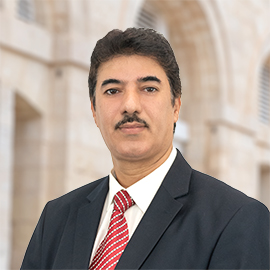
Dr. Ali Saleh Alarussi
Dean of College of Business
Contact the Director for this Program
Dr. Ali Saleh Alarussi
Email: [email protected]
Phone: +356 2169 6970