

MSc in Advanced Mechanical Engineering
This Program is accredited by the MFHEA

Program Overview
The MSc programme is directed at applicants who possess a first degree in Mechanical Engineering or another related field, who want to advance their careers into new specialised areas of Engineering and Technology. It targets those who want to gain advanced knowledge and skills in design, innovation and critical thinking.
Social, economic and environmental influencers are considered in order to gain insight into novel engineering approaches that incorporate sustainability, safety and quality rationales. Furthermore, this MSc programme forms a good entry point for candidates who want to venture into research and development whether in academia or industry.
Program Information
GENERAL INFORMATION
MQF / EQF Level 7
18 Months ( Full-Yime)
36 Months ( Part-Time)
Face-to-face / Online
ECTS: 90 US: 45
COURSE STRUCTURE
| MODULE CODE | MODULE / UNIT TITLE | COMPULSORY / ELECTIVE | ECTS / ECVETS | MODE OF DELIVERY | MODE OF ASSESSMENT |
| ENR511 | Research Methodology | Compulsory | 6 | Lectures, Tutorials | Projects |
| MEE511 | Advanced Fluid Mechanics | Compulsory | 6 | Lectures, Tutorials | Examination, Assessment |
| MEE512 | Advanced Fluid Mechanics of Materials | Compulsory | 6 | Lectures, Tutorials | Examination, Assessment |
| MEE513 | Contemporary Topics in Thermo-Fluids | Compulsory | 6 | Lectures, Tutorials | Examination, Assessment |
| MEE514 | Rotating Machinery | Compulsory | 6 | Lectures, Tutorials | Examination, Assessment |
| ENR521 | MSC Thesis II | Compulsory | 6 | Lectures, Independent Research | Presentation Report |
| ENR522 | Engineering Seminars | Compulsory | 3 | Lectures, Independent Research | Report |
| MEE521 | Computational Fluid Dynamics | Compulsory | 6 | Lectures, Independent Research | Simulation Reports |
| MEE522 | Finie Element Analysis | Compulsory | 6 | Lectures, Tutorials, Computer Simulations | Simulation Reports |
| MEE523 | Modern Engine Technologies | Compulsory | 6 | Lectures, Tutorials | Exam |
| MEE524 | Experimental Techniques in Mechanical Enginering | Compulsory | 3 | Lectures, Lab Experiments | Exam, Lab Reports |
| ENR531 | MSC Thesis II | Compulsory | 6 | Lectures, Independent Research | Presentation Thesis |
| ENR532 | Operational Safety in Engineering | Compulsory | 6 | Lectures, Site Visits | Exam, Assignment |
| ENR533 | Sustainabiity and Engineering | Compulsory | 6 | Lectures,Tutorials, Independent Research | Exam, Assignment |
| MEE531 | HVAC | Compulsory | 6 | Lectures, Projects | Exam, Project4 |
| MEE532 | Robotics and Automation | Elective | 6 | Lectures, Tutorials | Exam |
| MEE533 | Mechanics of Composite Materials | Elective | 6 | Lectures, Tutorials | Exam |
| TOTAL ECTS / ECVETS for Course Completion | 90/120 |
ENTRY REQUIREMENTS
For general Entry Requirements:
Please see the information on the Admission Page – Entry Requirements
DEGREE REQUIREMENTS
GPA needed to earn the degree: 3.0 or higher out of 4.0
Credits needed to earn the degree: 90 ECTS or 45 US credits
Degree level: MQF Level 7
LEARNING OUTCOMES
Knowledge
Upon completion of the MSc program, the earner will be able to:
- Analyze complex mechanical systems from the thermal strength and operational performance angles.
- Identify and include the notions of operational efficiency, safety and quality within mechanical systems.
- Describe the constituents of experimental measurement procedures, capture data and analyze results.
- Identify the suitable numerical and computational techniques to be used to solve mechanical engineering problems.
- Quantify the impacts of mechanical systems on sustainability and sustainable development.
Skills
Upon completion of the MSc program, the learner will be able to:
- Design complex thermal and mechanical systems and components.
- Design, build, instrument and run experiments and analyze their results.
- Apply research methodologies and conduct research to advance and develop Mechanical Engineering know-how.
- Use technical and theoretical know-how to pursue a successful career in Engineering.
- Solve advanced engineering problems and analyze and resolve complicated situations.
- Use advanced computational technologies to solve mechanical engineering problems.
- Practice professional mechanical engineering and its professional challenges and requirements.
PEDAGOGICAL METHODS
The proposed MSc program will use a balanced mix of teaching and learning modalities to ensure that its learning outcomes are optimally realized. These include:
- Formal lectures
- Invited lectures by industrial personalities
- Tutorials
- Supervised lab experiments
- Computer simulation applications
- Supervised hands-on workshop exercises
- Practical projects and independent research
- Industrial site visits
- Video demonstrations within formal face-to-face lectures
EMPLOYABILITY/CAREERS
Graduates from this MSc program can find themselves occupying the following non-exhaustive positions in industry:
- Systems operations specialists
- Project managers
- Design engineers
- Thermal engineers
- Technical consultants
- Technical sales and marketing professionals
- Technical contractors
- HVAC engineers
- Research and development engineers (in academia and industry)
- Poer production engineers
- Automotive engineers
- Safety engineers
- Quality assurance engineers
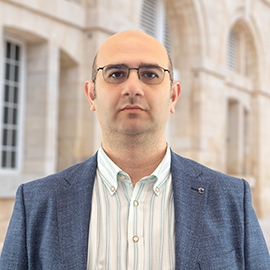
Dr. Eren Yildirim
Assistant Professor
Contact the Director for this Program
Dr. Eren Yildirim
Email: [email protected]
Phone: +356 2169 6970