

MSc in Computer Science

This Program is accredited by the MFHEA
Program Overview
The reason for offering M.Sc. in Computer Science is to provide a foundation for a career in technology research and development. Jobs in the computer science industry can typically be found in a company’s information technology department, a government agency, or a non-profit entity.
For individuals already working in the information technology sector, a master’s degree program may provide a career boost by enabling professionals to expand their expertise in the field. For example, a master’s degree program gives students specialized skills in one or more areas of computer science or technology, including software development, augmented and virtual reality, network security, or artificial intelligence.
Students can also gain the research and analytical skills during the project- or research-based modules that they need to prepare for successful admission into a Ph.D. program for further study.
Program Information
GENERAL INFORMATION
Program is Taught Based & Research Based
MQF Level 7
18/24 Months (Full-Time)
36 Months (Paret-Time)
Face-to-face / Online
ECTS Taught Based: 90 US: 45
ECTS Research Based: 120 US: 60
COURSE STRUCTURE
| MODULE CODE | MODULE / UNIT TITLE | COMPULSORY / ELECTIVE | ECTS / ECVETS | MODE OF DELIVERY | MODE OF ASSESSMENT |
| CSC 532 | Research Methods and Ethics | Compulsory | 6 | Lectures, Tutorials | Examination Assesment |
| CSC 551 | Software Security Testing | Elective | 10 | Lectures, Tutorials | Examination Assesment |
| CSC 552 | Network Security | Elective | 10 | Lectures, Tutorials | Examination Assesment |
| CSC 531 | Programming Languages | Compulsory | 10 | Lectures, Tutorials | Examination Assesment |
| CSC 543 | Artificial Intelligence | Elective | 8 | Lectures, Tutorials | Examination Assesment |
| CSC 504 | Fundamentals of Machine Learning and Data Analytics | Elective | 6 | Lectures, Tutorials | Examination Assesment |
| CSC 542 | Computer Vision | Elective | 10 | Lectures, Tutorials | Examination Assesment |
| CSC 591 | M.Sc. Project | Compulsory for Taught Based Degree | 16 | Lectures, Independent Research | Presentation Report |
| CSC 592 | M.Sc. Thesis | Compulsory for Resarch Based Degree | 60 | Lectures, Independent Research | Presentation Report |
| CSC 541 | Data Mining | Elective | 8 | Lectures, Tutorials | Examination Assesment |
| CSC 561 | Advance Computer Graphics | Elective | 8 | Lectures, Tutorials | Examination Assesment |
| CSC 562 | Augmented, Virtual and Mixed Reality | Elective | 8 | Lectures, Tutorials | Examination Assesment |
| IEE 567 | Project Management | Elective | 6 | Lectures, Tutorials | Examination Assesment |
| CSC 553 | Cloud Security | Elective | 6 | Lectures, Tutorials | Examination Assesment |
| TOTAL ECTS / ECVETS for Course Completion | 90/120 |
ENTRY REQUIREMENTS
For general Entry Requirements:
Please see the information on the Admission Page – Entry Requirements
DEGREE REQUIREMENTS
GPA needed to earn the degree: 3.0 or higher out of 4.0
Credits needed to earn the Taught Based degree: 90 ECTS or 45 US credits
Credits needed to earn the Research Based degree: 120 ECTS or 60 US credits
Students may join M.Sc. in Computer Science (research-based) program, in which 30 ECTS credits are devoted to courses and 60 ECTS credits to an individual research-based thesis.
Degree level: MQF Level 7
LEARNING OUTCOMES
Upon the completion of this programme, the students will be able to:
- Interpret computer science concepts, designs, and solutions effectively and professionally
- Apply knowledge of computing to produce effective designs and solutions for specific problems
- Evaluate, criticize, and synthesize scholarly literature relating to the field of computer science
- Responsible for creating software development tools and systems in modern computing platforms
- Assess and critique the state-of-the-art developments within their chosen field of interest.
- Besides, a graduate with M.Sc. in Computer Science (research-based) can undertake outcomes-based research for solving a particular computer-based solution with minimal supervision.
PEDAGOGICAL METHODS
All courses are based on a learner-centred approach with an emphasis on motivating learning. This is guaranteed by lively interaction between lecturers and participants using professional lecture videos, regular online sessions and discussion forums. Case discussions, group presentations, debates or virtual laboratory sessions take place.
For blended classes, faculty will use e-learning approach, mostly technology -based learning such as gamification, collaborative learning, virtual model, flipped classroom and other online coaching tools. Educational materials will be linked from academic resources licensed through the AUM Library (e.g. Business Source Complete, and other databases).
EMPLOYABILITY/CAREERS
- AI & Machine Learning Engineer – Build intelligent systems for automation and data-driven decision-making.
- Computer Vision / Graphics Engineer – Develop applications in augmented reality, virtual reality, and gaming.
- Cloud Computing & DevOps Engineer – Optimize cloud-based infrastructure and automation processes.
- IT Consultant – Advise businesses on technology implementation and digital transformation.
- Systems & Network Administrator – Manage and maintain IT networks and infrastructure.
- Academic Researcher & Lecturer – Contribute to advancements in computer science through research and teaching.
- Entrepreneur / Startup Founder – Launch and innovate within the tech industry and emerging fields.
- Software Engineer / Developer – Design, develop, and maintain cutting-edge software solutions.
- Data Scientist / Analyst – Apply AI, machine learning, and data mining techniques to extract insights.
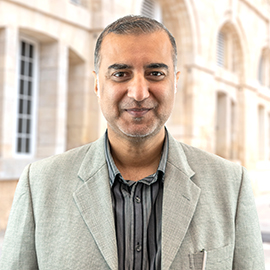
Dr. Nabeel Talib
Associate Professor
Contact the Director for this Program
Dr. Nabeel Talib PhD
Email: [email protected]
Phone: +356 2169 6970