

BSc in Accounting

This Program is accredited by the MFHEA
Program Overview
The Bachelor of Accounting is an undergraduate degree designed to provide students with a thorough grounding in financial and managerial accounting, auditing, taxation, and accounting information systems.
This program prepares students to understand and analyse financial data, maintain accurate financial records, and ensure regulatory compliance in various organizational settings. Combining theoretical knowledge with practical application, the program is structured to meet the demands of today’s global business environment.
It also lays the foundation for professional certifications such as CPA, ACCA, or CMA.
Program Information
GENERAL INFORMATION
MQF Level 6
4-year program
Face-to-face
ECTS: 240
COURSE STRUCTURE
| MODULE CODE | MODULE / UNIT TITLE | COMPULSORY / ELECTIVE | ECTS / ECVETS | MODE OF DELIVERY | MODE OF ASSESSMENT |
| ACC 101 | Principles of Accounting I | Compulsory | 6 | Lectures, Tutorials | Examination Assesment |
| ACC102 | principles of Accounting II | Compulsory | 6 | Lectures, Tutorials | Examination Assesment |
| ECO 101 | Micreoeconomics | Compulsory | 6 | Lectures, Tutorials | Examination Assesment |
| ECO 103 | Macroeconomics | Compulsory | 6 | Lectures, Tutorials | Examination Assesment |
| FIN 301 | Money and Capital Markets | Compulsory | 6 | Lectures, Tutorials | Examination Assesment |
| ACC 201 | Intermediate Accounting II | Compulsory | 6 | Lectures, Tutorials | Examination Assesment |
| MAT 201 | Business Statistics | Compulsory | 6 | Lectures, Tutorials | Examination Assesment |
| MGT 101 | Principles of Management | Compulsory | 6 | Lectures, Tutorials | Examination Assesment |
| MGT 301 | Operation Management | Compulsory | 6 | Lectures, Tutorials | Examination Assesment |
| PHI 220 | Business Ethics | Compulsory | 6 | Lectures, Tutorials | Examination Assesment |
| MGT 360 | Organizational Behviour | Compulsory | 6 | Lectures, Tutorials | Examination Assesment |
| MGT 340 | Management Information Systems | Compulsory | 6 | Lectures, Tutorials | Examination Assesment |
| ACC202 | Intermediate Accounting II | Compulsory | 6 | Lectures, Tutorials | Examination Assesment |
| FIN 310 | Taxes | Compulsory | 6 | Lectures, Tutorials | Examination Assesment |
| FIN 350 | Auditing | Compulsory | 6 | Lectures, Tutorials | Examination Assesment |
| ACC 301 | Advanced Accounting | Compulsory | 6 | Lectures, Tutorials | Examination Assesment |
| MGT 102 | Principles of Marketing | Compulsory | 6 | Lectures, Tutorials | Examination Assesment |
| FIN 420 | Research and Decision Making | Compulsory | 6 | Lectures, Tutorials | Examination Assesment |
| MGT 250 | Consumer Behaviour | Compulsory | 6 | Lectures, Tutorials | Examination Assesment |
| ENG 101 | English Composition I | Elective | 6 | Lectures, Tutorials | Examination Assesment |
| HIS 101 | History of Mediterranean | Elective | 6 | Lectures, Tutorials | Examination Assesment |
| MAT 101 | Introduction to Data Analysis | Elective | 6 | Lectures, Tutorials | Examination Assesment |
| REL 101 | Religious worlds in Comparative Perspectives | Elective | 6 | Lectures, Tutorials | Examination Assesment |
| BIO 101 | Unity of Life and Lab | Elective | 6 | Lectures, Tutorials | Examination Assesment |
| EnG 102 | English Composition II | Elective | 6 | Lectures, Tutorials | Examination Assesment |
| CHE 101 | Introduction to Chemistry and Lab | Elective | 6 | Lectures, Tutorials | Examination Assesment |
| COM 101 | Communication in Multicultural Setting | Elective | 6 | Lectures, Tutorials | Examination Assesment |
| PSY 101 | Introduction to Psychology | Elective | 6 | Lectures, Tutorials | Examination Assesment |
| SOC 101 | Introduction to Sociology | Elective | 6 | Lectures, Tutorials | Examination Assesment |
| PHY 101 | Introduction to Physical University and Lab | Elective | 6 | Lectures, Tutorials | Examination Assesment |
| BUS 101 | Introduction to Business | Elective | 6 | Lectures, Tutorials | Examination Assesment |
| General Eduction: Arts / Humanities I | Elective | 6 | Lectures, Tutorials | Examination Assesment | |
| General Eduction: Arts / Humanities II | Elective | 6 | Lectures, Tutorials | Examination Assesment | |
| Free Elective | Elective | 6 | Lectures, Tutorials | Examination Assesment | |
| Free Elective | Elective | 6 | Lectures, Tutorials | Examination Assesment | |
| Free Elective | Elective | 6 | Lectures, Tutorials | Examination Assesment | |
| Free Elective | Elective | 6 | Lectures, Tutorials | Examination Assesment | |
| Free Elective | Elective | 6 | Lectures, Tutorials | Examination Assesment | |
| Free Elective | Elective | 6 | Lectures, Tutorials | Examination Assesment | |
| Free Elective | Elective | 6 | Lectures, Tutorials | Examination Assesment | |
| TOTAL ECTS / ECVETS for Course Completion | 240 | ||||
ENTRY REQUIREMENTS
For general Entry Requirements:
Please see the information on the Admission Page – Entry Requirements
DEGREE REQUIREMENTS
GPA needed to earn the degree:
2.0 or higher
Credits needed to earn the degree:
ECTS: 240
Degree level:
MQF Level 6
LEARNING OUTCOMES
Knowledge
At the end of this program, the students will be able to Identify and apply knowledge creatively, exercise critical thought, and offer possible solutions for accounting problems. Describe the function of accounting in businesses in the public and private sectors and compile financial statements in compliance with relevant and recognized accounting standards. Be familiar with various authoritative pronouncement through financial and tax accounting, be able to locate and conduct research using online databases and be able to resolve accounting issues though their understanding, knowledge, and application of research methods and databases.
Skills
At the end of this program, students will be able to apply and explain the application of accounting standards and regulation, and where appropriate international accounting standards. Incorporate and apply the information system knowledge gained in creating business opportunity solutions. Exhibit dedication and behavior in line with social responsibility. Interpret and assess both financial and non-financial information for decision making purposes. Prepare tax computations and comprehend issues related to tax advice for both private citizens and corporate entities. Cooperate with others in a management team and interact with various stakeholders.
PEDAGOGICAL METHODS
The pedagogical philosophy is grounded in the belief that effective education in accounting, finance, and business must integrate theory with real-world application, foster critical thinking, and promote ethical responsibility in a global context.
Our value inclusive and culturally responsive teaching, recognizing the diverse backgrounds of our students. We strive to create a respectful, adaptive, and supportive learning environment that prepares graduates to contribute meaningfully to their organizations and societies. We are committed to cultivating an engaged, learner-centered environment where students are encouraged to take an active role in their educational journey.
Our approach emphasizes interactive teaching methods, including case studies, simulations, group projects, and experiential learning opportunities such as internships and live consulting projects. We believe in constructive alignment, ensuring that learning outcomes, teaching strategies, and assessment methods are cohesively designed to support deep learning.
Faculty serve not only as instructors but also as mentors and facilitators, helping students develop both technical expertise and soft skills such as communication, collaboration, and leadership.
EMPLOYABILITY/CAREERS
Industries
- Financial Accountant
- Financial Analyst
- Auditors (External)
Academics & research
- Proceeds with Master studies in Finance & Business
- Financial Analyst
- Accounting Research Analyst
Employability ( Freelance or other )
- Tax Consultant
- Budget Analyst
- Forensic Accountant
Corporate & Commercial Roles
- Management Accountant
- Auditor (Internal)
- Compliance Officer
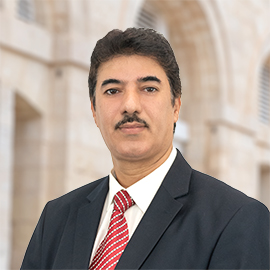
Dr. Ali Saleh Alarussi
Dean of College of Business
Contact the Director for this Program
Dr. Ali Saleh Alarussi
Email: [email protected]
Phone: +356 2169 6970